
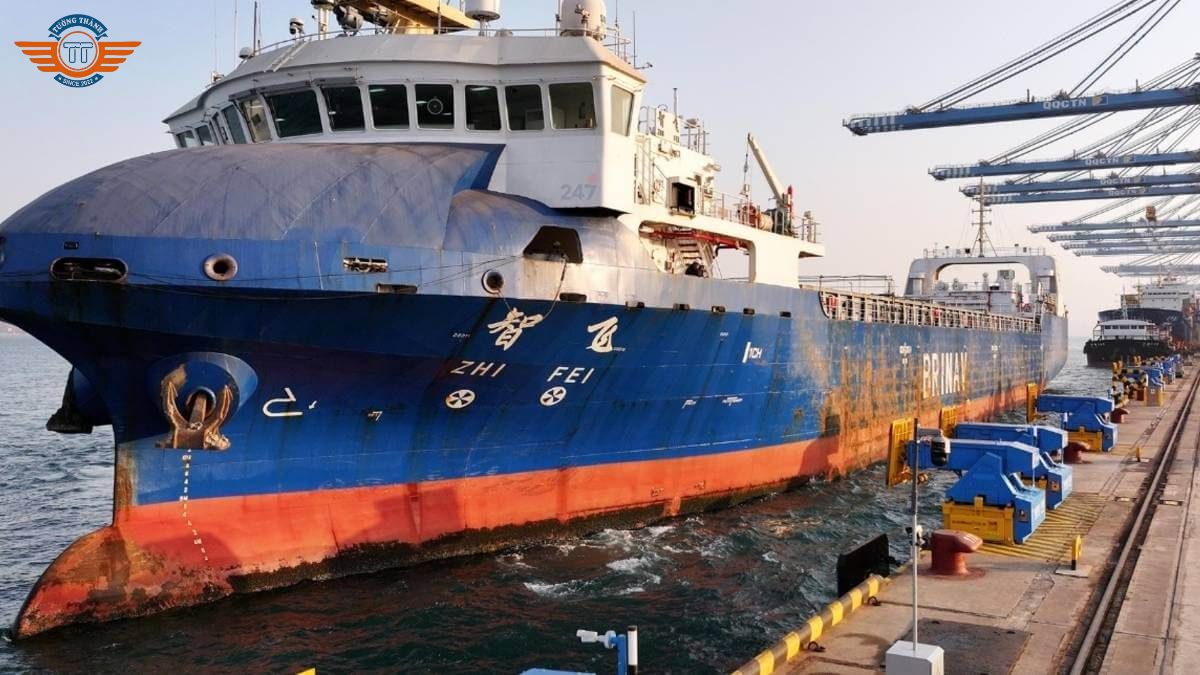
The global maritime transport industry is witnessing significant changes thanks to the rapid development of automation technology. Recently, at Qingdao Port, the autonomous electric container ship Zhi Fei successfully completed a fully automated docking process in just 30 seconds.
This event has attracted strong attention from the maritime industry and is considered an important milestone for the future of autonomous container ships and smart port ecosystems.
1. Zhi Fei Autonomous Container Ship – A Breakthrough in Maritime Technology
The Zhi Fei vessel has a capacity of around 300 TEU and is equipped with an advanced autonomous control system. During a trial conducted on February 21, the ship completed the entire berthing process without direct human intervention on board.
A key feature of this system is the combination of intelligent navigation technology and a vacuum mooring system. With these technologies, the ship can automatically determine its position, adjust its speed, and approach the berth with high precision.
The docking process takes only 30 seconds, significantly faster than traditional methods that require multiple manual operations.
Reducing docking time helps shipping lines increase vessel turnaround speed, optimize schedules, and reduce port waiting time, which is a crucial factor in container transportation chains.
2. Notable Operational Efficiency
According to operational data, the autonomous container ship can operate with relatively high efficiency. Each year, the vessel can complete approximately 353 voyages, equivalent to a transport capacity of around 80,800 TEU of cargo.
The vessel can travel nearly 48,000 nautical miles annually, demonstrating its ability to operate consistently and continuously within coastal shipping networks.
In addition to transportation efficiency, the application of autonomous technology also brings several advantages for shipping companies:
-
Reduce the number of crew members required by about 30%
-
Reduce up to 80% of human-error risks during navigation
-
Save approximately USD 27,500 in operating costs per month
These benefits allow shipping companies to optimize costs while improving safety and operational stability.
3. Technology Behind the Autonomous Container Ship
The success of autonomous ships comes not only from hardware but also from integrated advanced technology systems. The vessel is equipped with high-precision domestic radar, allowing it to detect surrounding environments and obstacles in real time.
In addition, high-speed 5G connectivity plays a critical role in data transmission and remote control. Through this connection, the onshore control center can continuously monitor the vessel’s operations and intervene when necessary.
The ship also uses an electric propulsion system, which improves maneuverability and reduces emissions compared with traditional fuel-powered vessels. This is also an important step toward green and sustainable maritime transport.
4. Toward Automated Ports and Digitalized Logistics Chains
Autonomous container ships are only one component of the smart port ecosystem being developed at Qingdao Port. Here, equipment such as automated container cranes and driverless transport vehicles have already been put into operation.
The integration of autonomous ships with automated port systems helps create a nearly fully digitalized logistics chain, where many operational processes are handled by technology rather than manual labor.
This model not only improves port productivity but also reduces cargo handling time, thereby enhancing the efficiency of the entire supply chain.
In the future, the technology being tested on the Zhi Fei vessel may become the foundation for larger autonomous container ships or LNG-powered autonomous vessels operating on long-haul international routes.
5. A New Trend in Global Maritime Transport
The emergence of autonomous container ships shows that the logistics industry is entering a period of major transformation. As labor costs continue to rise and efficiency requirements become stricter, shipping companies must seek technological solutions to remain competitive.
Automation not only reduces operating costs but also improves safety, minimizes errors, and optimizes operational efficiency. It is expected to be one of the key trends shaping the maritime transport industry in the coming decades.
6. Tuong Thanh – Supporting Businesses in International Transport
As logistics technology continues to evolve, import–export businesses need reliable and flexible logistics partners to optimize their supply chains.
Tuong Thanh Logistics provides international transportation solutions via sea freight, air freight, and multimodal transport, helping businesses optimize costs, ensure delivery timelines, and improve operational efficiency.
📩 Contact Tuong Thanh today to receive consultation on the most suitable logistics solutions for your business.